
How do you know your panel needs an upgrade?
The panel usually tells you. Every slot is full and the last few circuits were squeezed in on tandem breakers. A breaker trips under ordinary use. The cover is warm, or there’s a buzz you can hear from the hallway. The house still runs on screw-in fuses. Or you’re about to add something big, and the arithmetic on the existing service doesn’t work.
That last one catches people out. A Level 2 charger, a heat pump, an electric tankless heater or a finished basement each hangs new load on the same service. TVA EnergyRight pays rebates of up to $800 on a qualifying heat pump and $900 on a heat pump water heater, which is good news as long as the panel can carry them.
Sometimes the answer is smaller than a new panel. Load balancing moves circuits so one side of the panel isn’t doing all the work, and a worn breaker can be replaced on its own. We’ll tell you which situation you’re in.
When does NES need to be involved?
Nashville Electric Service spells it out in its Electric Service Guidelines, version 20, in effect since June 30, 2023. No NES Electrical Release is needed to replace breakers, meter blocks, conduit, a weatherhead, or a meter base of the same amperage when no wire is replaced. A release is required for new conductor, for “adding additional load (changing the panel size)”, for a relocated or new service, and for one that has been off more than a year.
So a breaker swap is between you and us. A true service upgrade involves you, us, Metro Codes and NES, and NES schedules planned outages and reconnects Monday through Friday during business hours. Their line for that is 615-736-6900.
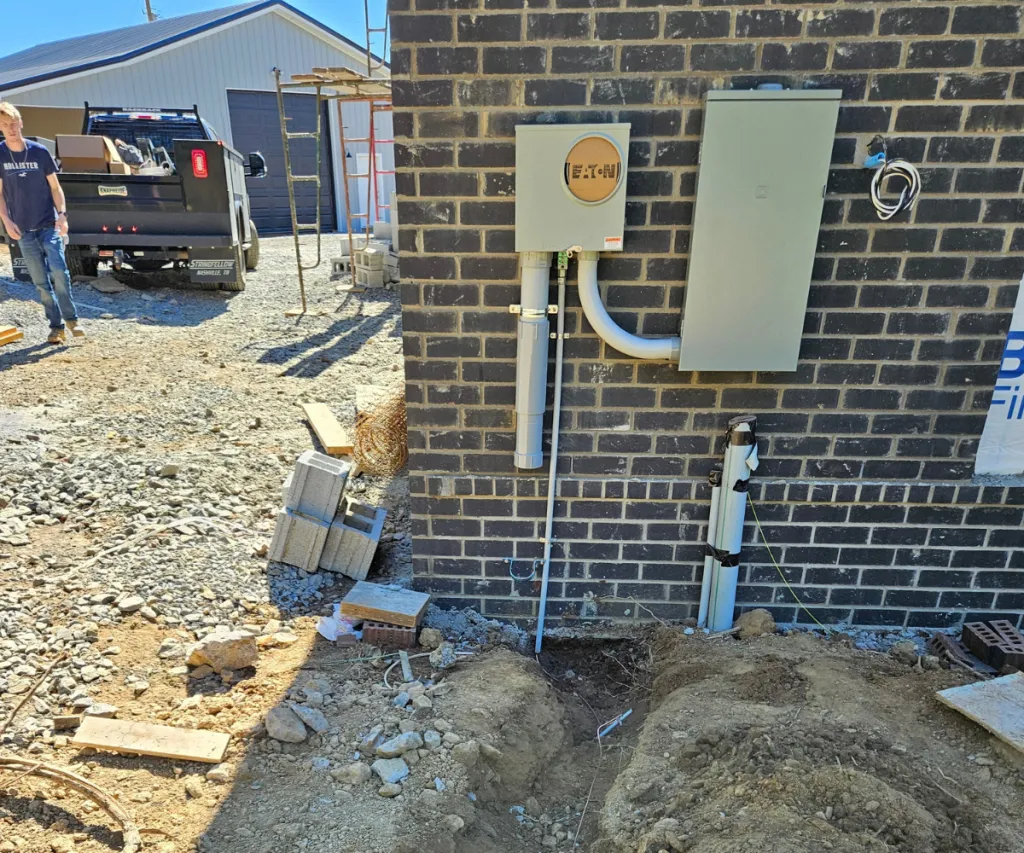
It also helps to know where the responsibility changes hands. Metro Codes puts the owner in charge of everything from the point where NES’s drop connects to the riser and meter base. If a limb tears that stretch loose, a licensed electrical contractor makes the repair.
Meter bases, sub-panels and service size
Metro’s electrical permit application covers services from 60 to 6,000 amps and treats sub-panels as an item of their own. A detached garage or workshop may only need a sub-panel fed from the main. A house still on its original service may need the meter base and the panel replaced together.
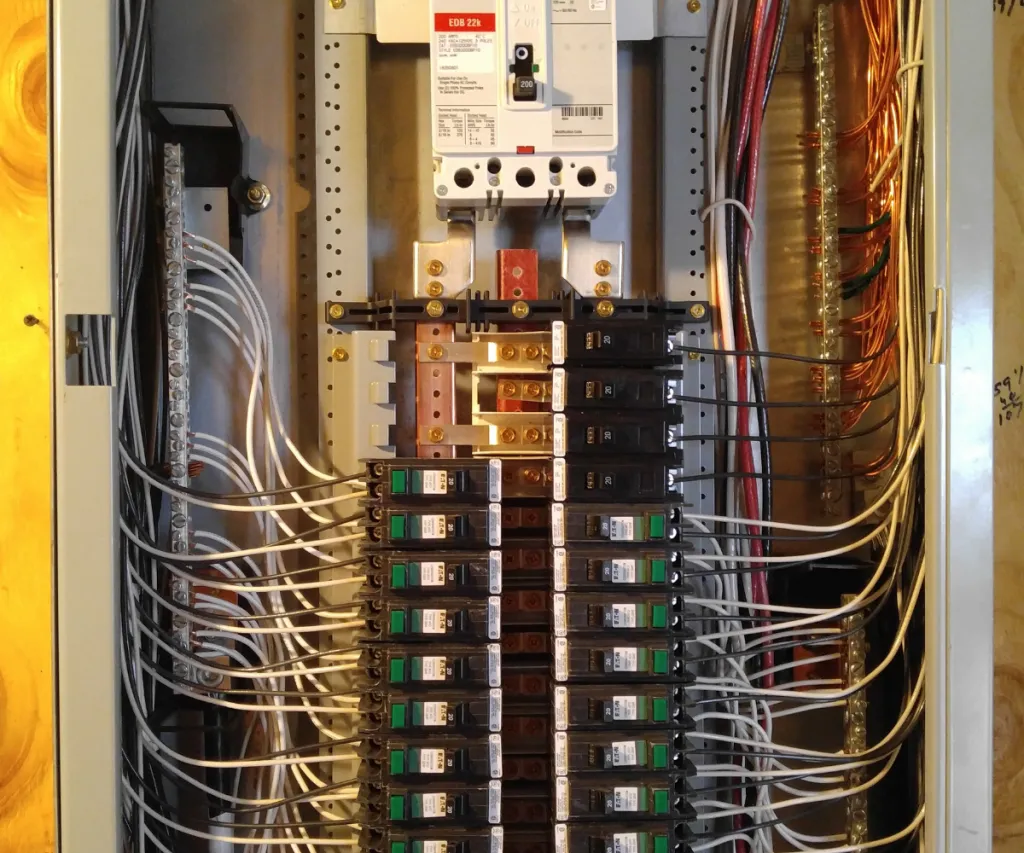
Our gallery shows both ends of that work: exterior meter bases with their disconnects, and the plug-in breaker panel pictured above with every conductor landed.
What moves the price of a panel upgrade?
The amperage you’re moving to, and whether the service conductors and meter base change with it, since that is what brings NES and the release into the job. Where the panel sits, and whether it’s recessed in a finished wall that has to be opened and patched. How many circuits have to be re-landed, and the shape they’re in. The permit. Each sits on its own line of the estimate.