
What counts as a kitchen update?
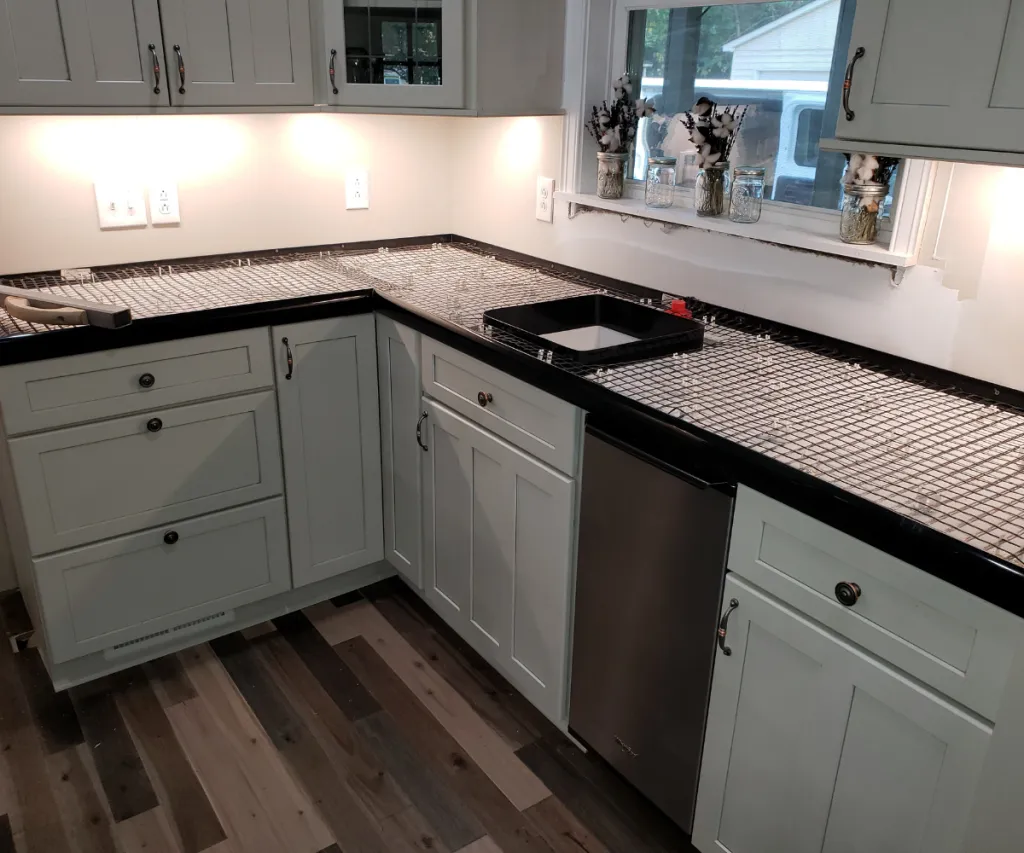
Everything short of tearing out the cabinets. A new sink and faucet, a dishwasher where there wasn’t one, pendants over the island, under-cabinet lights, new hardware, open shelving, a circuit for the microwave that keeps tripping the toaster’s breaker. The white shaker kitchen with black counters in the photo is from our gallery, and most of what makes a kitchen feel new is on that list.
Updates also expose what an older kitchen lacks. Countertop outlets without GFCI protection, a microwave sharing a circuit with half the counter, a sink shutoff that hasn’t turned since it was installed: each one turns up during the work, and each is a trade we hold.
Cabinet hardware and open shelving are the quick wins. New pulls go on fast, and shelves get anchored into studs so a stack of plates stays on the wall.
Why does a dishwasher need two trades?
It takes a hot water supply, a drain, and electrical power. So does a disposal, minus the supply, and a refrigerator with an ice maker needs a water line as well as an outlet. With two companies, the plumber sets the water and leaves the wiring for someone else, and the new dishwasher sits in the dining room in between. Jamie holds both licenses, so it’s one estimate and one install.
Do kitchen updates need a permit in Nashville?
Some do. Metro Codes says cabinets and vanities set without electrical or plumbing work need no permit. Moving the sink, adding a plumbing fixture, or moving or adding an outlet does. New circuits are new wiring, and Metro inspects them to the 2023 NEC. The estimate says which parts of your project are permitted work. Outside Metro, your city or county sets the rules, and the estimate follows theirs.
Gas ranges and kitchen lighting
Switching from an electric range to gas means a gas line to the kitchen with a shutoff behind the range. Jamie is certified in gas line work, so that run can be looked at on the same visit as the rest. Lighting is the other big change: pendants, recessed cans and under-cabinet strips in layers, each on a switch placed where you actually stand. Under-cabinet strips do the most for the money, because they light the counter where the chopping happens instead of the back of your head.
The cost depends on how many fixtures and appliances change, whether the sink or anything else moves, how far new circuits run from the panel, wall and ceiling access, and the permit, each on its own line of the estimate.