
What electrical work do we take on?
Jamie Hamed is a licensed electrician and a licensed plumber, and he has been pulling wire since he was 14. The electrical side of the business covers the panel and the service coming into it, the circuits, outlets and switches, lighting inside and out, standby generators, EV chargers, and the troubleshooting when something trips, flickers or goes dark.
Each of those has its own page with the specifics: the NES rules on a panel change, the breaker a Level 2 charger calls for, the transfer switch a generator needs. What follows applies to all of them.
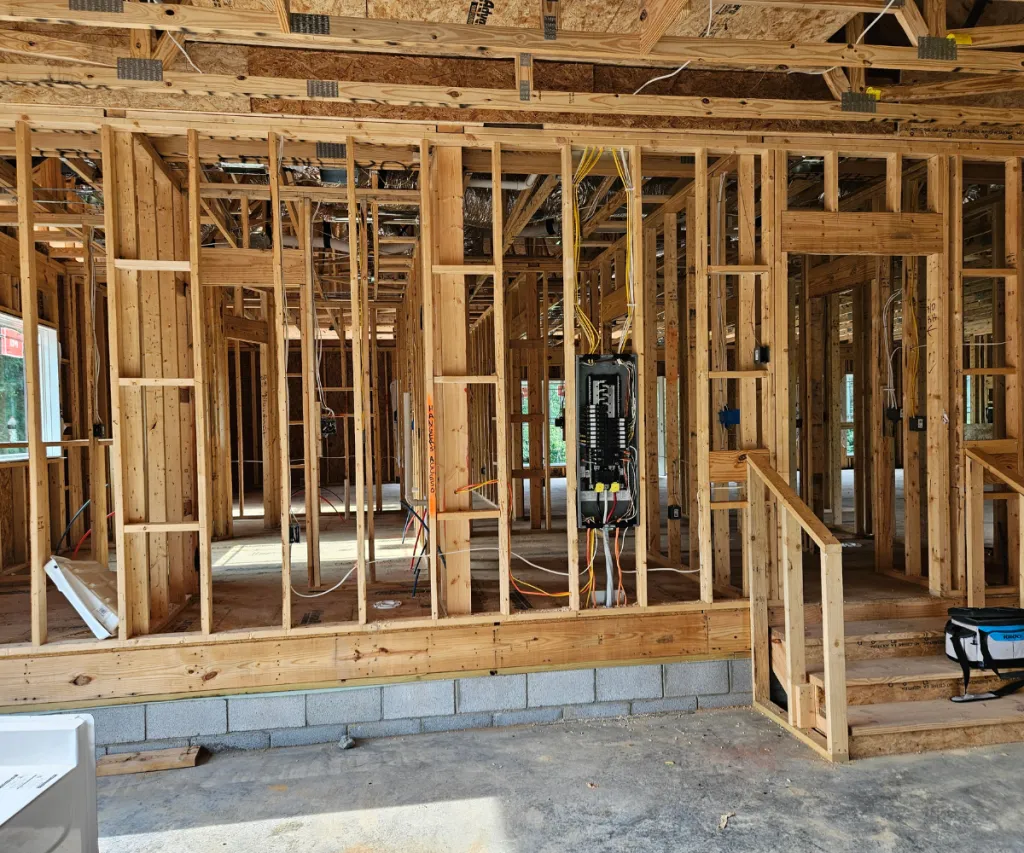
The photo at the top comes from our gallery: a framed house at rough-in, boxes set and cable pulled before a single sheet of drywall went up. That stage decides most of how a house will behave electrically for the next few decades.
How often does house wiring start a fire?
Often enough that the national numbers are worth knowing. The NFPA counted an average of 31,650 home fires a year from 2019 to 2023 that began in electrical distribution or lighting equipment, with 430 deaths, 1,300 injuries and $1.6 billion in property damage each year.
Most houses never get near that. The ones that do usually warn first: a switch plate warm to the touch, a breaker that trips whenever the space heater runs, an outlet that smells like hot plastic. Any of those is worth a call before it’s worth a fire extinguisher.
Which electrical code applies to your house?
It depends where the house sits. Tennessee’s statewide rule adopts the 2017 National Electrical Code, in effect since October 1, 2018. Metro Nashville enforces the 2023 NEC, along with the 2024 building and residential codes and its own local amendments, so a panel in Hermitage is inspected to a newer book than one where the State does the inspecting.
Permits come from the power distributor, the local building official or the State. Inside Metro, trade permits are issued online only to licensed contractors who hold an e-permit account. A homeowner can pull a Metro homeowner electrical permit for their own principal dwelling, once every 12 months, if they do the work themselves.
Checking an electrician before you hire one
Start at verify.tn.gov, the State’s lookup for the licenses it issues. Tennessee requires a contractor’s license to bid or contract on a project of $25,000 or more, and a subcontractor needs one too once the electrical portion reaches that figure. Below that line, the Limited Licensed Electrician covers work in places that use the State Fire Marshal for permits and inspections.
Then read the estimate. Ours is itemized, with the scope, the timeline and the cost laid out line by line, so the permit, the materials and the labor are each visible. And when a job crosses into plumbing or drywall, the same company does that part, so nobody waits on a second contractor’s calendar.