
(615) 552-8676 Hermitage-based · Nashville and 14 Middle Tennessee towns [email protected]

Electrical

Level 2 EV charger installation

A Level 2 charger runs on 240 volts and a circuit of its own. We check the panel first, run the circuit to where you park, mount and connect the charger, and write the permit into the estimate.

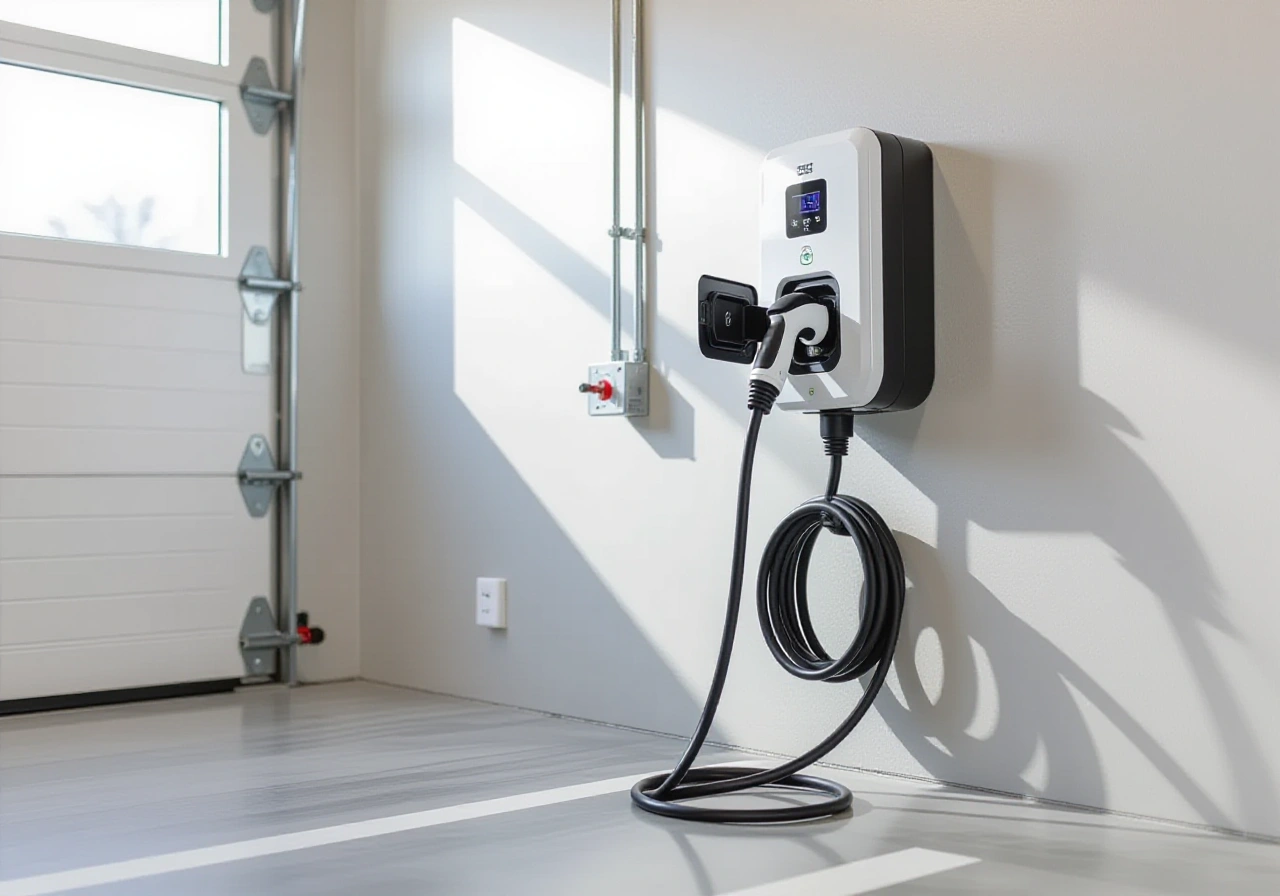
Level 2 EV charger mounted on a garage wall

What does a Level 2 charger need from the house?

The Department of Energy defines Level 2 home charging as 240-volt, the same voltage a dryer or a range uses. NES gets more specific: its charging page names a 40-amp two-pole breaker for Level 2, and a 15- or 20-amp breaker for Level 1, the cord that plugs into an ordinary outlet. NES also says 240-volt equipment “should be wired permanently”.

In practice that means a dedicated circuit from the panel to the charger, sized to the breaker and to the charger’s own installation manual, and hardwired the way NES recommends. The charger goes where its cable reaches the car’s port without crossing a walkway.

Will your panel handle an EV charger?

That’s the first thing we look at, before anyone buys a mounting bracket. A charger is a long, steady load, often running for hours overnight while the water heater and the furnace run too. A panel with spare capacity and open spaces takes one easily. An older, smaller service, or a panel with every slot spoken for, may need load balancing, a sub-panel or an upgrade first.

You hear which one at the estimate, with what each option costs, instead of on install day. If a heat pump or a hot tub is on the list for next year, say so then, and the panel math can include it.

Who is responsible for the charger permit?

You are, on paper. NES’s charging guidance says permits and inspections are the homeowner’s responsibility even when a contractor does the work. Inside Metro Nashville, trade permits go online only to licensed contractors with an e-permit account, so the practical answer is to hire one who pulls it. The DOE makes the same point from the other side: use a certified electrical contractor, and check whether a permit is required.

Ask for the permit to be written into the estimate. Ours are itemized, so it shows up as its own line.

Is there still a tax credit for a home charger?

Not for new installs. The federal 30C credit is gone for chargers installed after June 30, 2026, according to the IRS guidance on the 2025 law that ended it. If yours went in before that date, your tax preparer can tell you how to claim it.

What changes the cost of an EV charger install?

Distance, first. A garage that shares a wall with the panel is a short run; a carport or a detached garage across the yard may mean a trench or a long path through the attic. After that come the panel’s capacity, the charger you choose, whether drywall has to be opened, and the permit. The estimate lists each one.

Answers

EV chargers: questions

Do I need a permit to install an EV charger in Nashville?

Yes, a hardwired Level 2 charger on a new circuit is permitted electrical work. NES says permits and inspections are the homeowner’s responsibility even when a contractor installs the charger, and Metro Nashville issues trade permits online only to licensed contractors with an e-permit account. Make sure the permit is in the price before any work starts.

What size breaker does a Level 2 EV charger need?

NES names a 40-amp two-pole breaker for Level 2 home charging, on a 240-volt circuit. Some chargers are built for a different circuit size, so the charger’s installation manual and the electrical code set the final breaker and wire size. Level 1 charging, the cord that plugs into a regular outlet, runs on a 15- or 20-amp breaker.

Can I install my own EV charger?

Only at your own home, and in Metro Nashville only under a homeowner permit, which covers your principal dwelling once every 12 months and requires you to do the work. The DOE recommends a certified electrical contractor for Level 2 installs, and NES still holds you responsible for the permit and the inspection whoever does the wiring.

How long does it take to install an EV charger at home?

Most of the time goes into the circuit, not the charger. A short run from a panel with room to spare is a far smaller job than a long attic run, a trench to a detached garage, or a panel upgrade first. Metro’s inspection follows the work. Your itemized estimate gives the timeline for your house before anything is scheduled.

Can I charge my EV from a regular outlet?

Yes, that’s Level 1, and NES says it runs on a 15- or 20-amp breaker. It’s slow, and it works best on a circuit with nothing else on it, so a garage outlet shared with a freezer is a poor candidate. If a night on Level 1 doesn’t put back what you drive in a day, Level 2 at 240 volts is the step up.

Is there a tax credit for an EV charger in 2026?

Not for chargers installed after June 30, 2026. The IRS says the federal 30C credit ends for property placed in service after that date, under the July 2025 law that changed several energy credits. If your charger was in service before then, your tax preparer can tell you whether it qualifies and how to claim it.

Get an estimate

Get an estimate for EV chargers

Tell Jamie what’s going on. He’ll set a time to look. Scope, timeline and cost, line by line.

Rather talk? Call (615) 552-8676 or email [email protected].

Where your message goes and what the site keeps: our privacy policy.

Itemized estimates

Tell Jamie what is going on

The breaker that keeps tripping, the water heater that quit, the bathroom you are done looking at. Describe it and you get an estimate with the scope, the timeline and the cost on one page.

Call Get an Estimate